

What Is Dim Sum? Origins, Meaning & Cantonese Culture
AT A GLANCE
Chinese name: 点心 (Cantonese: dim sum | Mandarin: diǎn xīn) – literally ‘touch the heart’
Origin: Tang Dynasty tea houses, China (618–907 AD); refined in Guangdong (Canton) Province
Style of dining: Small, individually portioned Cantonese dishes served with tea (yum cha / 饮茶)
Core categories: Steamed, baked, pan-fried, deep-fried, dessert
Dim sum in Singapore: Available at fine Cantonese restaurants including Li Bai at Sheraton Towers Singapore
How Did Dim Sum Come About?
Dim sum originated from the roadside teahouses of the ancient Silk Road during the Tang Dynasty (618–907 AD). Travellers stopped for tea, and small bites of food – called 点心 (diǎn xīn), meaning ‘touch the heart’ – were served alongside. Over centuries, this practice evolved into yum cha (饮茶); the formal Cantonese tradition of dining on small dishes with tea that remains central to Cantonese culture today.
The story of dim sum began not in a restaurant, but on the road.
During the Tang Dynasty, merchants and travellers crossing the Silk Road would stop at small wayside teahouses to rest. These teahouses – the earliest form of yum cha culture – served tea accompanied by simple snacks. Over time, the snacks grew more elaborate, teahouses became more refined, and the ritual of gathering over small dishes with tea became embedded in the social fabric of Cantonese life.
By the Song Dynasty (960–1279 AD), teahouses had become genuine social institutions across Guangdong Province. The act of yum cha – drinking tea with dim sum – became a daily ritual cutting across class and age. Families gathered. Business was discussed. Elders were honoured. Generations connected.
This tradition migrated with Cantonese immigrants across Southeast Asia, Hong Kong, and beyond. In Hong Kong, the Sunday dim sum gathering became as culturally ingrained as any major festival – families arriving before restaurants opened, occupying round tables large enough for three generations.
Today, dim sum is served across the world. But the impulse beneath it has never changed: small dishes, shared with a table full of people who matter to you.
What Is Dim Sum? A Complete Guide to What’s in the Basket
Dim sum is a style of Cantonese dining – not a single dish – consist of small, individually portioned dishes served alongside Chinese tea. A typical spread includes: steamed dumplings, baked pastries, pan-fried items, congee, noodles, and desserts. The concept emphasises variety, sharing, and the ritual of yum cha (drinking tea together).
Is Dim Sum Junk Food?
No. Dim sum ranges from highly nutritious steamed dishes (such as har gow and steamed tofu) to indulgent fried items. The healthiness of a dim sum meal depends entirely on selection. Steamed dim sum is among the cleanest to savour in Chinese cuisine, while deep-fried varieties should be enjoyed in moderation.
What Does Dim Sum Actually Contain?
The most common proteins are pork, shrimp, and chicken. Dim sum also frequently features water chestnuts, bamboo shoots, Chinese mushrooms (shiitake), preserved egg yolk, and a range of seafood including crab, scallop, and fish paste. Premium dim sum may incorporate abalone, black truffle, lobster, and wagyu beef.
The Four Core Categories of Dim Sum
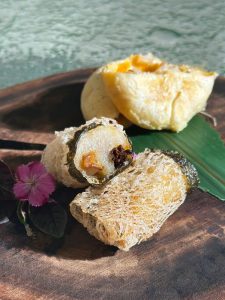
- Steamed (蒸点): Har gow (shrimp dumplings), siu mai (pork and prawn), cheung fun (rice noodle rolls), and lo mai gai (sticky rice in lotus leaf). The purist’s category: steaming preserves natural flavours and is considered the true test of a Cantonese kitchen.
- Baked and pan-fried (焗点 / 煎点): Char siu bao (BBQ pork buns), egg tarts, turnip cake, pan-fried dumplings. Typically golden-edged with caramelised exteriors and tender fillings.
- Deep-fried (炸点): Wu gok (taro dumplings with honeycomb crust), spring rolls, prawn dumplings. Indulgent and textural – best consumed immediately.
- Dessert dim sum (甜点): Mango pudding, egg tarts, sesame balls (jian dui), steamed sponge cake (ma lai go). A sweetness that’s not cloying like most Western desserts.
What Makes a High-Quality Dim Sum Wrapper?
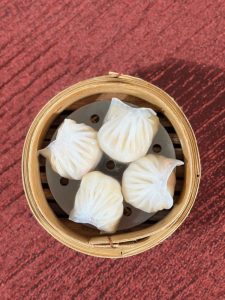
The wrapper is where Cantonese dim sum techniques are most visibly tested. A properly-made har gow wrapper – crafted from wheat starch and tapioca – should be thin enough to reveal the pink of the shrimp through it. It should also hold its shape when lifted with chopsticks, and break cleanly with the gentlest bite. This level of precision distinguishes fine Cantonese dim sum from imitations.
At Li Bai Cantonese Restaurant at Sheraton Towers Singapore, dim sum reflects decades of Hong Kong culinary mastery – premium ingredients, classic techniques, and a table setting of jade, silver and fine bone china that honours the meal’s heritage.
What Is the Difference Between Dim Sum and Dumplings?
Dumplings are one category within dim sum – but dim sum are not simply dumplings. Dim sum refers to the entire Cantonese small-plate dining style encompassing steamed, fried, baked, and sweet dishes. Ordering only dumplings at a dim sum restaurant is akin to ordering only pasta at an Italian restaurant: accurate, but incomplete.
Is Dim Sum the Same as Dumplings?
No. Dim sum encompasses dozens of dish categories, of which dumplings are just one. The experience of dim sum is specifically about variety – cycling through steamed, fried, baked, and sweet dishes across a meal, paired with tea.
Is Gyoza the Same as Dim Sum?
No. Gyoza is the Japanese adaptation of the Chinese guotie (potsticker) – a pan-fried dumpling refined in Japan into a thinner-skinned form, typically filled with pork and cabbage. While gyoza shares ancestry with Chinese dumplings, it is a Japanese dish that sits outside the Cantonese dim sum tradition, and has distinct cultural context, ingredients, and ritual.
What Are the Two Types of Dumplings in Dim Sum?
- Wheat dough wrappers: Used for potstickers (guotie), wontons, and xiao long bao. Thicker, chewier, and more forgiving to make.
- Starch-based wrappers: Made from wheat starch and tapioca, used for har gow. Distinctly Cantonese – producing a translucent, jewel-like appearance that is significantly harder to execute correctly and is considered the higher-skill category.
What Do Chinese People Call Dim Sum?
In Cantonese, the experience is called 飮茶 (yum cha) – literally ‘drink tea.’ You do not “eat dim sum”, you “go for yum cha.'” The tea comes first. The food accompanies it. In Mandarin, the equivalent is 喝早茶 (hē zǎo chá) – ‘drink morning tea.’ The tea-first framing is culturally significant: it centres the social ritual, with the food as accompaniment rather than purpose.
What Does ‘Dian Xin’ Mean?
点心 (dian xin in Mandarin; dim sum in Cantonese) literally translates as “touch the heart.” It refers to the small dishes served alongside tea. The name reflects the philosophy of the tradition: the food is not meant to be a full meal, but a gesture – something offered to nourish and connect.
Is Dim Sum Healthy or Unhealthy?
Dim sum ranges from highly nutritious to moderately indulgent, depending on selection. Steamed dim sum such as har gow, steamed tofu, and cheung fun, are low in fat, high in protein, and easily digestible. Deep-fried and baked items are higher in fat and sodium. Overall, it’s possible for mindfully-ordered dim sum courses to be a balanced and nourishing meal.
What Is the Healthiest Option at Dim Sum?
Steamed dishes are universally the healthiest category. Har gow (steamed shrimp dumplings), steamed chicken feet (high in collagen, beneficial for joint health), steamed fish with ginger, and plain congee are all nutritionally sound options. Avoid adding excessive soy sauce, which is high in sodium.
Why Is Dim Sum High in Calories?
Fried dim sum items – such as wu gok (taro dumplings), spring rolls, and prawn dumplings – are deep-fried in oil and can be calorically dense. The filling and glaze of baked buns like char siu bao contain significant sugar and fat. The sodium content across all dim sum is also notable, as many dishes use soy sauce, oyster sauce, and shrimp paste.
What Is the Most Unhealthy Dim Sum Dish?
Deep-fried items such as wu gok (taro puff), spring rolls, and prawn toast are typically the highest in fat and calories. However, no dim sum dish is inherently harmful when consumed in moderation as part of a varied meal – the traditional yum cha approach of sampling small portions across many dishes naturally limits overconsumption of any single item.
What Is the Healthiest Chinese Meal to Order?
For a health-conscious Cantonese meal, prioritise steamed dishes, seafood-based items, and tea-paired dining. Traditional Chinese Medicine considers dim sum ingredients such as ginger (anti-inflammatory), Chinese mushrooms (immune-supporting beta-glucans), and lotus leaf (used in lo mai gai – cooling and detoxifying) to carry functional wellness benefits beyond basic nutrition.
Why Is Dim Sum So Good?
Dim sum is structurally engineered for pleasure. Each dish is small enough to finish in three or four bites – creating a constant cycle of completion and anticipation. The variety means no single flavour overwhelms. The communal format – shared baskets, a round table, reaching across for the last har gow – makes eating a social act rather than a solitary one. Dim sum was specifically designed to be enjoyed together, which is precisely why it has endured for over a thousand years.
Why Is Dim Sum Such a Significant Part of Cantonese Culture?
Dim sum is the primary expression of yum cha (饮茶) culture – the Cantonese tradition of gathering over tea and small dishes that have been practiced since the Tang Dynasty. Family bonds are maintained, business relationships are built, and generational values are passed down. In Cantonese culture, going for yum cha is not simply eating – it is an act of togetherness with deep social and symbolic meaning.
In Cantonese culture, the Sunday dim sum gathering is not a meal. It is an institution.
Three generations at a single round table. Grandparents holding court, refilling everyone’s tea before their own. The newest family member introduced over bamboo steamers. Old conversations resumed mid-sentence, as if the week between had not happened.
The etiquette of dim sum carries this meaning in small, accumulated rituals. When someone pours your tea, you tap two fingers lightly on the table – a gesture dating to a Qing Dynasty story of an emperor who wished to thank companions without revealing his identity. The practice of letting elders eat first. The unspoken understanding that whoever invites, pays. These are not rules. They are expressions of care encoded into the meal.
Dim sum also carries the Cantonese value of 心意 (sum yi) – sincerity of intention. Choosing a thoughtful restaurant, ordering carefully, ensuring the eldest is served first: all of this communicates something that does not require words.
At its highest expression – in the private dining rooms and grand halls of fine Cantonese restaurants – dim sum becomes a statement of who you are and who you are choosing to honour. The quality of the har gow wrapper says something. The provenance of ingredients says something. The setting, the service, the tea selection – all of it communicates.
“点心. Touch the heart. It has always been this simple, and this profound.”
FREQUENTLY ASKED QUESTIONS:
What is dim sum?
Dim sum is a style of Cantonese dining consisting of small, individually portioned dishes served alongside Chinese tea. It encompasses steamed dumplings, baked pastries, pan-fried snacks, congee, noodles, and desserts – enjoyed communally in a tradition called yum cha (饮茶), meaning ‘drink tea.’
How did dim sum originate?
Dim sum originated in the roadside teahouses of the Tang Dynasty Silk Road (618–907 AD), where travellers stopped for tea and small bites of food. The practice evolved into yum cha culture in Guangdong (Canton) Province, China, and has been a cornerstone of Cantonese social life for over 1,000 years.
Why is it called dim sum?
Dim sum comes from the Cantonese pronunciation of 点心 (diǎn xīn in Mandarin), meaning ‘touch the heart.’ The name reflects the philosophy of the tradition: small dishes served not as a full meal, but as a gesture of nourishment and care shared between people.
What does “dian xin” mean?
点心 (dian xin) is the Mandarin pronunciation of the characters also read as ‘dim sum’ in Cantonese. Literally translating as ‘touch the heart’ – the small dishes served alongside tea during the Cantonese yum cha tradition.
Is dim sum the same as dumplings?
No. Dumplings are one category within dim sum, but dim sum is an entire style of Cantonese dining that includes steamed, baked, fried, and sweet dishes. Calling dim sum ‘dumplings’ is like calling Italian cuisine ‘pasta’ – technically related, but significantly incomplete.
Is gyoza the same as dim sum?
No. Gyoza is a Japanese dish adapted from the Chinese guotie (potsticker). While it shares ancestry with Chinese dumplings, it is not part of the Cantonese dim sum tradition, which has distinct cultural context, wrapper techniques, and dining rituals specific to Guangdong, China.
Is dim sum healthy or unhealthy?
It depends on selection. Steamed dim sum such as har gow and cheung fun is low in fat and high in protein. Deep-fried items like wu gok and spring rolls are higher in calories. A mindfully ordered dim sum meal with predominantly steamed dishes is generally a balanced and nutritious choice.
What is the healthiest option at dim sum?
Steamed dishes are the healthiest category: har gow (steamed shrimp dumplings), steamed fish with ginger, plain congee, and steamed tofu. Steaming preserves nutrients without adding fat. Avoid adding excess soy sauce, which is high in sodium.
What is the difference between dim sum and yum cha?
Yum cha (饮茶) is the ritual – drinking tea with small dishes in a communal setting. Dim sum (点心) refers specifically to the food served during yum cha. In common usage, ‘going for dim sum’ and ‘going for yum cha’ mean the same thing, but strictly speaking, yum cha is the broader experience and dim sum is the food.
Where can I eat dim sum in Singapore?
Dim sum is available at Cantonese fine dining restaurants across Singapore. Li Bai Cantonese Restaurant at Sheraton Towers Singapore (39 Scotts Road) has served award-winning Cantonese cuisine since 1985, including a refined dim sum repertoire crafted and led by experienced Hong Kong born Executive Chinese Chef Chung Yiu Ming.
Experience Dim Sum at Li Bai Cantonese Restaurant, Singapore
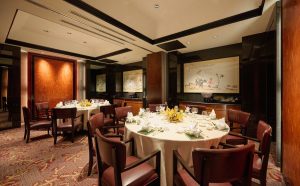
Li Bai Cantonese Restaurant at Sheraton Towers Singapore has been one of Singapore’s premier destinations for authentic Cantonese dining since 1985. Named after Li Bai (李白), the revered Tang Dynasty poet (701–762 AD) who is considered the greatest Chinese poet of all time, the restaurant serves Cantonese cuisine in the grand imperial tradition – amid jade, silver, and fine bone china, with a culinary team whose mastery is rooted in Hong Kong.
Our dim sum menu reflects the classical Cantonese repertoire, elevated with premium seasonal ingredients and the technical precision that only decades of practice can produce.
Li Bai Cantonese Restaurant
Address: Sheraton Towers Singapore, 39 Scotts Road, Lower Lobby, Singapore 228230
Monday – Saturday: 11:30AM – 3:00PM (last order 2:30PM) | 6:30PM – 10:00PM (last order 9:30PM)
Sunday: 10:30AM – 3:00PM (last order 2:30PM) | 6:30PM – 10:00PM (last order 9:30PM)
Reservations: Via Sevenrooms
Enquiries: Contact Us Here or call +65 6839 5623
Follow: @LiBaiSG | LiBaiRestaurant
Reserve your table and experience why Cantonese dining has touched hearts for a thousand years.


