
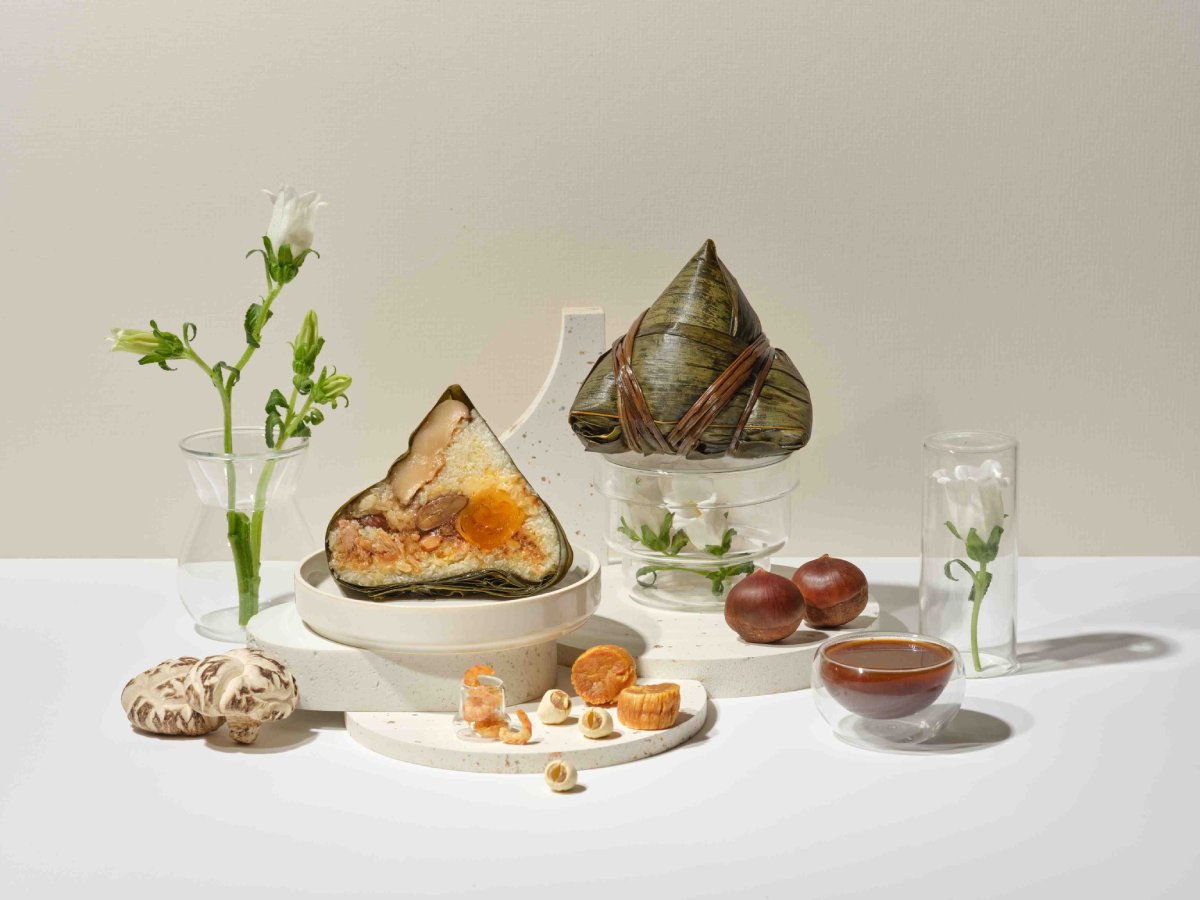
Rice Dumplings in Singapore: A Guide to History, Varieties & Where to Buy
Long before glutinous rice is folded into bamboo parcels, it already carries centuries of meaning. Known across Singapore and Malaysia as bak chang or ba zhang, these leaf-wrapped delicacies are more than just seasonal food. They are a tradition of remembrance, family, and regional identity — one that returns each year as the Dragon Boat Festival (端午节, duān wǔ jié), 19 June 2026, draws near.
This guide traces the story of rice dumplings from the legend of Qu Yuan (屈原, Qū Yuán) to the many dialect traditions found in Singapore today. You will find a clear breakdown of the main varieties, their characteristic ingredients, wrapping styles, and practical details on where to enjoy them this festive season.
What Is a Rice Dumpling — and Why Is It Called “Bak Chang” or “Ba Zhang”?
Known in Mandarin as zòng zi (粽子), rice dumpling is a traditional Chinese delicacy made with glutinous rice and a variety of sweet or savoury fillings, wrapped in bamboo, lotus, or pandan leaves, then steamed or boiled until cooked through. The result is a fragrant, compact parcel with a satisfyingly rich, yielding texture.
In Singapore and Malaysia, the names bak chang and ba zhang are far more commonly heard. Both terms come from the Hokkien and Teochew dialects respectively — bak (肉, ròu) means “meat,” while chang or zhang (粽) refers to the dumpling itself. In Cantonese, it is simply called joong. Regardless of which name you reach for, the rice dumpling you unwrap is the same beloved parcel of shared heritage, eaten and cherished across Chinese communities for millennia.
The Legend of Qu Yuan
The origin of rice dumplings is inseparable from the life of Qu Yuan — a patriotic poet and statesman of the ancient state of Chu during the Warring States period. When his king refused his counsel and his warnings went unheeded, Qu Yuan was exiled. Upon learning that the Chu capital had fallen to the Qin, he was overcome with grief and drowned himself in the Miluo River on the fifth day of the fifth lunar month.
The people of Chu, who revered him deeply, raced out in boats to search for him. Unable to recover his body, they threw rice into the river to keep the fish away. Over generations, those offerings evolved into the intricately wrapped dumplings we know today, and the boats became the dragon boats that define the festival. The Dragon Boat Festival has been observed on the fifth day of the fifth lunar month ever since, and in 2026, it falls on Friday, 19 June.
Every rice dumpling eaten during this season is, in its quiet way, both a culinary pleasure and a tribute to memory, loyalty, and cultural continuity.
The Art of Wrapping
One of the most distinctive features of rice dumplings is the wrapping itself — and it varies as much as the fillings within. Bamboo leaves are the most widely used, lending the glutinous rice a subtle, earthy fragrance as it cooks. Lotus leaves are favoured in Cantonese-style dumplings, imparting a softer, floral aroma. Pandan leaves are a hallmark of Nyonya chang, adding a distinctly Southeast Asian fragrance that immediately sets them apart.
Shapes too, carry the fingerprints of tradition. The classic pyramid form is the most universally recognised. Some Cantonese dumplings are wrapped as a flat rectangular parcel, while certain Teochew varieties take on an elongated form quite unlike any other dialect’s style. More than a matter of technique, the act of wrapping is a gesture of care — learned at home, passed down from grandmother to grandchild, and preserved long after the original hands are gone.
Rice Dumplings by Dialect Tradition
Singapore’s rice dumpling culture reflects the diversity of Chinese dialect communities. Each community brought its own culinary sensibility, and those distinctions have been faithfully preserved across generations. Common to most savoury varieties are pork belly, Chinese sausage (lup cheong), dried shrimps, and shiitake mushrooms — a shared foundation upon which each dialect builds its own flavour story.
Hokkien Bak Chang
The Hokkien Bak Chang is among the most familiar styles in Singapore, immediately recognisable by its deep, dark colour. Before wrapping, the glutinous rice is stir-fried with dark soy sauce and five-spice powder — a step that gives it both a rich hue, and a bold, assertive fragrance. The filling is generous: pork belly, dried shrimps, chestnuts, shiitake mushrooms, and salted egg yolk, all folded into a classic pyramid shape. The result is full-bodied, savoury, and deeply comforting — a flavour profile that speaks plainly of home.
Teochew Ba Zhang
Teochew Ba Zhang is less commonly found but no less treasured. What sets it apart is its three-way versatility: it comes in savoury, sweet, or shuāng pīn (双拼) versions — the latter containing both profiles within a single dumpling. While the savoury filling shares some ingredients with the Hokkien variety, Teochew dumplings are more nuanced, often incorporating mung bean paste or lotus paste for the sweet component, and lighter in both colour and taste.
At Li Bai, the Teochew tradition is given its own thoughtful interpretation. Our version uses preserved winter melon combined with mung bean paste — less sweet than a conventional Teochew dumpling, yet faithful to that defining shuāng pīn balance of sweet and savoury in every bite. This refined approach can be found in our Teochew Beef Dumpling (350gm, $42), where the characteristic nuance of the style is elevated further with premium beef ribs.
Cantonese Joong
Cantonese Joong is celebrated for its range and refinement — qualities that mirror Cantonese cuisine’s broader reputation for balance and technique. It may be pyramid-shaped or crafted as a guǒ zhēng zòng (裹蒸粽), a rectangular parcel wrapped in both bamboo and lotus leaves, which together lend the rice a compound fragrance of great delicacy. Mung beans are a characteristic addition, and the inclusion of dried scallops (conpoy) is what makes the Cantonese joong particularly distinctive — lending a deep, savoury oceanic quality that other dialect varieties rarely match.
At Li Bai, this tradition finds its fullest expression in our handcrafted seasonal collection. Our rice dumplings feature a careful balance of lean pork and roasted duck alongside traditional aromatics — yielding that satisfying contrast of tender, yielding meat against firm, fragrant glutinous rice that defines a truly well-crafted Cantonese joong. The Abalone and Pumpkin Rice Dumpling (700gm, $50) and Traditionally Steamed Rice Dumpling (350gm and 700gm) both reflect Li Bai’s four-decade heritage of Cantonese culinary mastery.
Hakka Ban Zong
The Hakka Ban Zong (粄粽, bǎn zòng) is distinguished most immediately by its choice of legume: where Hokkien and Cantonese dumplings reach for mung beans, Hakka dumplings characteristically use black-eyed peas, which lend a slightly different texture and earthiness to the filling. Some regional versions also incorporate radish and peanuts. Generally lighter in colour than its Hokkien counterpart and more evenly distributed in flavour, the Hakka bak chang has a satisfying, home-style character — straightforward, nourishing, and honest in its simplicity.
Hainanese Bak Chang
Hainanese rice dumplings stand apart both aromatically and in their generosity of filling. Unlike most other dialect varieties, they are typically wrapped in banana or osmanthus leaves, which lend a distinctive floral-green fragrance that is immediately recognisable. The fillings are hearty — large chunks of pork belly, chestnuts, shiitake mushrooms, and glutinous rice — and in some family traditions, dried squid or cuttlefish is added for a deeper oceanic umami note. The overall result is rich, substantial, and deeply comforting: a dumpling built for nourishment.

Nyonya Chang / Kueh Chang
Nyonya chang (娘惹粽, niáng rě zòng) is one of the most visually arresting rice dumplings in Singapore’s culinary landscape, and one of the most complex in flavour. It belongs to the Peranakan community — the descendants of early Chinese immigrants who married into local Malay communities — and its character is a direct expression of that extraordinary culinary fusion.
The rice is typically dyed a luminous blue with the extract of butterfly pea flowers (bunga telang), wrapped in both bamboo and pandan leaves for a layered, herbaceous fragrance. The filling combines minced pork, candied winter melon (冬瓜, dōng guā), fermented soybean paste (豆酱, dòu jiàng or tau cheo), ground coriander, and other fragrant Peranakan aromatics — achieving a sweet-savoury balance that is unmistakably its own. There is nothing quite like it in the broader rice dumpling repertoire, and it remains one of the most beloved expressions of Singapore’s multicultural food heritage.
Kee Chang (Kansui / Alkaline Dumpling)
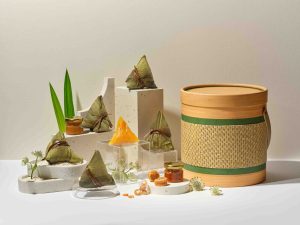
Kee Chang, or alkaline dumpling, occupies a unique and gentle space in the rice dumpling world as its sweet counterpart. Made with glutinous rice soaked in lye water, it turns translucent and a pale golden-yellow during cooking, with a pleasingly chewy, springy texture that is quite unlike the denser savoury varieties. Originating in the Hokkien dialect community, its appeal spread over time across all Chinese dialect groups in Singapore. It is traditionally eaten as a light dessert or snack, dipped in sugar, gula melaka, or kaya.
At Li Bai, the “Kansui” Rice Dumpling is offered in a set of six petit pieces (70gm each, $42), served alongside house-made kaya and our own XO sauce — a pairing that honours the classic sweet tradition while introducing a savoury, umami-rich counterpoint that speaks to Li Bai’s instinct for refined, layered flavour.
Li Bai’s 2026 Rice Dumpling Collection
From 15 May to 19 June 2026, Li Bai Cantonese Restaurant presents a seasonal rice dumpling collection that reflects its Cantonese heritage and Hong Kong culinary mastery. Crafted with premium ingredients and the kind of refined technique that has defined Li Bai for forty years, the collection spans both cherished traditions and inventive new interpretations.
Available for dine-in and takeaway:
- NEW Hong Kong ‘Satay’ Sauce Chicken Rice Dumpling, 350gm — $28 per piece
- NEW Vegetarian Millet Rice Dumpling, 350gm — $24 per piece
- NEW Kansui Rice Dumpling with Kaya & XO Sauce, 70gm (6 petit pieces) — $42
- Traditionally Steamed Rice Dumpling, 350gm (2 pieces) — $52
- Traditionally Steamed Rice Dumpling, 700gm — $45 per piece
- Abalone and Pumpkin Rice Dumpling, 700gm — $50 per piece
- Teochew Beef Dumpling, 350gm — $42 per piece
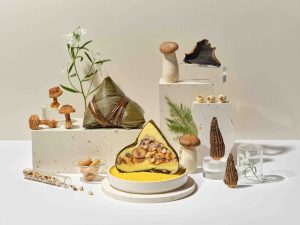
Among this year’s highlights, the Hong Kong ‘Satay’ Sauce Chicken Rice Dumpling brings the bold, aromatic character of sha cha sauce to life when marinated together with dried conpoy and dried shrimps — delivering a pronounced umami depth that makes for a thoroughly memorable bite. The Vegetarian Millet Rice Dumpling offers a lighter, plant-based alternative without any compromise on flavour or craft, its golden millet lending both a wholesome nuttiness and a striking visual character.
To order, WhatsApp our team or indicate your preferred dumplings in your reservation notes when booking your table. Takeaway collection is also available. Explore our full Cantonese food menu for more of what Li Bai has to offer beyond the festive season.
Follow us on Instagram and Facebook for festive updates and seasonal highlights.
Availability: 15 May – 19 June 2026
Where to Enjoy Li Bai’s Rice Dumplings
Li Bai Cantonese Restaurant is located at Sheraton Towers Singapore, where jade, silver, and fine bone china set the tone for an elevated dining experience. Whether you are gathering the family for a festive meal, hosting a corporate celebration, or seeking a refined setting for private dining in Singapore, Li Bai offers an experience that is as carefully considered as the food itself.
FREQUENTLY ASKED QUESTIONS:
What exactly is a rice dumpling?
A rice dumpling is a traditional Chinese food made from glutinous rice stuffed with sweet or savoury fillings, wrapped in leaves, and steamed or boiled until cooked. It is most closely associated with the Dragon Boat Festival.
How did rice dumplings come about?
Rice dumplings are linked to the legend of Qu Yuan, whose death inspired people to throw rice into the river as an offering. Over time, those offerings developed into the dumplings eaten today.
What does a rice dumpling usually contain?
Common ingredients include glutinous rice, pork belly, mushrooms, salted egg yolk and dried shrimps, and in some versions, mung beans, candied winter melon, or sweet bean paste.
How many types of rice dumplings are there?
The main types commonly found in Singapore include Hokkien, Teochew, Cantonese, Nyonya, and Kee Chang.
Is there a vegetarian version?
Yes. Vegetarian versions may contain mushrooms, chestnuts, tofu, peanuts, or other plant-based ingredients. Li Bai’s Vegetarian Millet Rice Dumpling is one such option.
How much do rice dumplings cost in Singapore?
Prices vary widely depending on ingredients and craftsmanship. Standard versions are usually more affordable (~$4.50 per piece), while premium restaurant offerings can be considerably higher (from $20 per piece).
Where can I buy rice dumplings in Singapore?
Rice dumplings are available at hawker stalls, specialty Peranakan shops, supermarkets, hotel restaurants, and fine dining Chinese restaurants during the season.
How should rice dumplings be reheated?
Steaming is the best method, as it preserves texture and fragrance. Frozen dumplings should be steamed directly without thawing.
When is Dragon Boat Festival in 2026?
Dragon Boat Festival falls on Friday, 19 June 2026.

About Li Bai Cantonese Restaurant
Li Bai Cantonese Restaurant at Sheraton Towers Singapore has been one of Singapore’s premier destinations for authentic Cantonese dining since 1985. Inspired by Li Bai (李白), the revered Tang Dynasty poet (701–762 AD) who is considered the greatest Chinese poet of all time, the restaurant serves Cantonese cuisine in the grand imperial tradition – amid jade, silver, and fine bone china —guided by a culinary team whose mastery is deeply rooted in Hong Kong.
Address: Sheraton Towers Singapore, 39 Scotts Road, Lower Lobby, Singapore 228230
Monday – Saturday: 11:30AM – 3:00PM (last order 2:30PM) | 6:30PM – 10:00PM (last order 9:30PM)
Sunday: 10:30AM – 3:00PM (last order 2:30PM) | 6:30PM – 10:00PM (last order 9:30PM)
For enquiries, Contact Us Here or call +65 6839 5623


